- Mar 12
- 5 min read
In industrial bakery manufacturing, major breakdowns tend to dominate attention. When a bakery oven fails, a mixer stops, or a key conveyor system goes down, the impact is immediate and visible.
Production halts, maintenance teams respond and the issue is escalated quickly through operations management.
But what of minor line interruptions? A short pause to realign product on a conveyor. A portioning adjustment. A brief delay between batches in the mixing stage. A momentary slowdown while operators intervene.
Individually, these events appear insignificant, yet in high volume bakery environments where lines run continuously across multiple shifts, these events accumulate quickly. Over the course of a shift, a day, or a week, the lost seconds compound into measurable throughput loss. The result is reduced equipment effectiveness, increased operator intervention and pressure on delivery schedules.
For many operations teams, the challenge is not catastrophic downtime. It is the decreased output caused by routine interruptions that have become part of the line’s “normal” behaviour.
Where Minor Interruptions Commonly Occur
Mixing and Ingredient Handling
Mixing stages are often assumed to be stable once recipes are established. In practice, small variations in batch timing do introduce minor delays into the line. Inconsistent ingredient feeding, small pauses during operator checks and slight variations in mixing cycles can extend the time between batches.
When the process further down the line continues at a fixed pace, these variations disrupt flow as the line waits for the next batch. In facilities producing multiple product types, these effects become more pronounced as mixing parameters shift between products.
Portioning and Depositing
Over time, weight accuracy can drift slightly as dough characteristics change or equipment warms during operation. When this occurs, operators may pause the line briefly to recalibrate or adjust settings. Even when adjustments take only seconds, frequency can accumulate across a shift.
Dough consistency also plays a role. Variations in hydration or temperature can affect depositing accuracy, leading to small corrections and occasional stoppages while operators ensure product specifications are maintained.
Oven and Cooling Transitions
If upstream production exceeds the capacity of downstream cooling or packaging stages, accumulation occurs. Operators may slow or briefly pause the line to manage product flow. Conversely, if downstream stages pull product faster than it exits the oven, gaps in the line appear.
Conveyors and Product Handovers
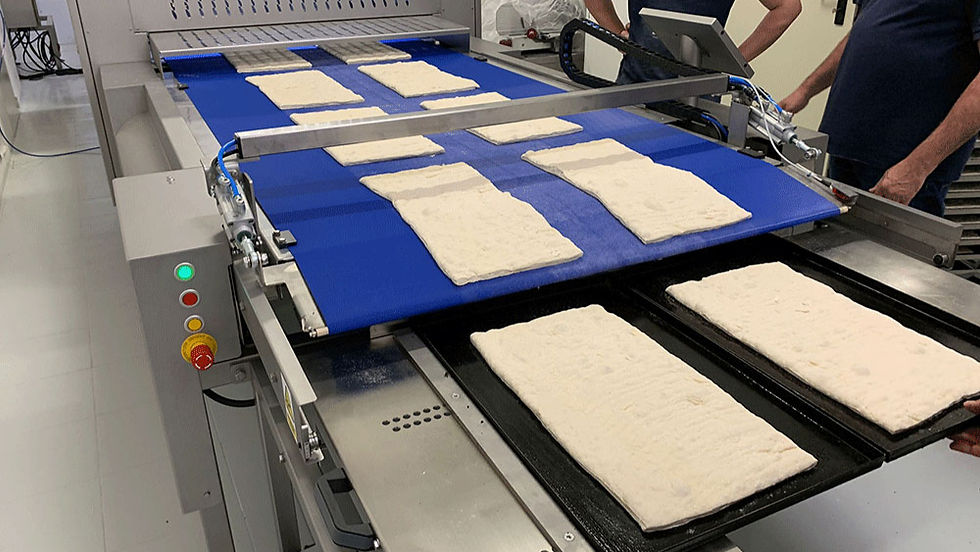
Product transfer points are particularly sensitive areas. Misalignment between conveyors, minor sensor sensitivity issues, or slight shifts in product positioning can trigger pauses. Operators often intervene manually to reposition products or reset sensors. These adjustments take only seconds, however when
repeated, they represent a meaningful loss of productive time.
Changeovers
Even when product changeovers are well planned, variability in cleaning procedures, equipment resets and parameter adjustments introduce short pauses throughout the process. Communication gaps between production, sanitation and engineering can extend delays. When portfolios expand and product complexity increases, interruptions tend to occur more frequently.
The Effect on Throughput
A single 20 second pause may appear trivial. However, if similar interruptions occur thirty or forty times during a shift, it becomes significant. Multiply it across several shifts per day with multiple production lines - and the effect becomes measurable in lost output.
These small interruptions influence several operational metrics:
● Reduced equipment effectiveness: Frequent short stops lower availability and performance rates
● Increased intervention: Operators spend time correcting issues rather than monitoring the line
● Product waste: Start-stop conditions can create off-spec product or uneven baking
● Scheduling pressure: Reduced throughput narrows the margin between planned production and delivery deadlines
Because these interruptions occur in short bursts, their cumulative impact often goes unnoticed until output targets are repeatedly missed.
Why Small Stoppages Often Go Unnoticed
Operational focus typically centres on major equipment failures which are disruptive and clearly measurable. Smaller interruptions, by contrast, may fall below reporting thresholds. If data systems only record downtime above a certain duration (e.g. several minutes), short interruptions can fade into the background.
Some production teams gradually accept smaller interruptions as an unavoidable part of line operation. Over time, these become normalised. In addition, separation between engineering and production can limit visibility into recurring minor issues. Production teams may see frequent short stops, while engineering teams usually receive reports of larger failures. Without shared data and analysis, issues can remain unresolved.
Practical Steps to Reduce Line Interruptions

Reducing micro-stoppages rarely requires major investment. Improvements can come from greater process consistency and better visibility into line behaviour.
Standardising Changeovers
Clear and consistent changeover procedures help reduce variability. When the sequence of cleaning, resetting and restarting equipment is standardised and responsibilities are clearly assigned, changeovers become more predictable. This reduces the number of small pauses that occur when teams troubleshoot during restarts.
Tighter Calibration Routines
Instead of waiting for visible changes in product weight or shape, some operators schedule calibration checks at defined intervals. Monitoring trends in portioning data can reveal gradual changes that might otherwise trigger repeated manual adjustments. Regular calibration of portioning and depositing systems helps prevent accuracy drift, production is affected.
Aligning Line Speeds
Balancing speeds across mixing, forming, baking, cooling and packaging stages can significantly reduce interruptions. When upstream and downstream equipment operate at compatible rates, product accumulation and gaps are minimised, reducing the need for operator intervention.
Monitoring Downtime
Improved visibility into short stops can transform how teams address minor interruptions. Modern monitoring systems allow operations teams to track stoppages lasting only a few seconds. By analysing this data, recurring patterns (such as frequent pauses at a specific conveyor or sensor) become easier to identify and address.
Reducing Manual Touchpoints
Repeated operator interventions often indicate an underlying process inconsistency. Rather than relying on operators to continually correct product positioning or adjust settings, many bakeries review the root causes of these interventions. Adjusting equipment alignment, refining process parameters, or improving product flow can eliminate the need for repeated manual corrections.
Building Resilience into High-Volume Bakery Production
In large-scale bakery manufacturing, operational performance is shaped by hundreds of small process variations that occur throughout the production day.
Addressing minor line interruptions requires a shift in perspective. Instead of focusing exclusively on major breakdowns, operations teams benefit from examining the brief pauses that accumulate unnoticed. Small improvements in process stability can deliver significant gains. Standardised procedures, better calibration routines and improved visibility allow teams to address the root causes of recurring interruptions.
In high-volume environments, protecting throughput is closely tied to protecting margins. The difference between a line that runs smoothly and one that experiences constant pauses may only be a few seconds at a time, but across weeks of production, those seconds add up.
For many bakery manufacturers, the opportunity lies not in eliminating major failures entirely, but in steadily reducing the small interruptions that quietly shape daily output.
To learn more about working with Interfood Technology in your baking processes, visit interfoodtechnology.com


_gif.gif)